The Battle of Teutoburg Forest: How a Masterful Ambush Broke the Roman War Machine
In the year 9 AD, the absolute foundation of Roman military supremacy shattered in the mud of northern Europe. Three veteran legions marched into the deep woods and never returned. The Battle of Teutoburg Forest stands as the most devastating military defeat of the early Roman Empire. It permanently halted imperial expansion across the Rhine river. The political machinery of antiquity relied entirely on the invincibility of its armies, and this massive military disaster sent shockwaves directly into the heart of the capital.
The story of this defeat is a masterclass in psychological manipulation, terrain exploitation, and catastrophic leadership failure. In this comprehensive guide, we provide a tactical breakdown of the ambush that changed European history. We also explain how you can step directly into the high-stakes world of ancient politics and warfare firsthand in Second Life.
The Strategic Climate Before the Disaster
The Roman Empire spent decades pushing its borders deeper into the untamed regions of northern Europe. Emperor Augustus demanded the total pacification of the Germanic tribes. The Roman economy required constant expansion. Conquered territories provided the tax revenue, raw materials, and enslaved labor needed to build massive public works in the civitas and feed the growing urban population—a ruthless economic system you can explore in detail in the Diary of a Roman Slave Trader.
The Roman military machine seemed unstoppable. Legions systematically dismantled enemy fortresses, built sprawling road networks, and established permanent military bases. The patrician elite operating out of the capital believed the complete subjugation of the northern tribes was totally inevitable. They drastically underestimated the intelligence and the resilience of the indigenous population.
Publius Quinctilius Varus and His Fatal Miscalculations
The emperor appointed Publius Quinctilius Varus as the governor of the newly established province. Varus possessed extensive experience as a bureaucratic administrator in peaceful regions like Syria. He lacked the tactical genius and the sheer paranoia required to survive on a hostile, unconquered frontier.
Varus treated the indigenous tribes like a fully broken, compliant people. He levied crushing taxes on villages that operated entirely on a barter system. He forced complex Roman legal frameworks upon fiercely independent clans who relied on traditional forms of justice. He operated from his summer headquarters with total arrogance, acting as if he were sitting safely within a luxurious Roman domus in the center of the empire. This administrative blindness created a pressure cooker of indigenous resentment.
Arminius and the Anatomy of Betrayal
The rebellion found its mastermind in a man who understood the Roman military perfectly. Arminius was a high-ranking prince of the Cherusci tribe. The empire took him as a hostage during his youth to ensure the compliance of his father. Arminius received a comprehensive Roman military education. He earned Roman citizenship, achieved equestrian rank, and commanded a trusted auxiliary cavalry unit.
Arminius understood exactly how the Roman military machine functioned. He recognized its absolute reliance on rigid formations, clear lines of communication, and open battlefields. He also knew the profound arrogance of the Roman command structure. Arminius used his position of trust to feed Varus false intelligence over several months. He slowly separated the Roman forces, convincing Varus to leave his heavy fortifications and march his army to crush a fabricated local uprising.
A Tactical Breakdown of the Battle of Teutoburg Forest
The Roman column that marched into the woods consisted of Legions XVII, XVIII, and XIX, accompanied by numerous auxiliary cohorts and a massive civilian baggage train. The total force numbered roughly 20,000 people.
The Marching Order and the Terrain
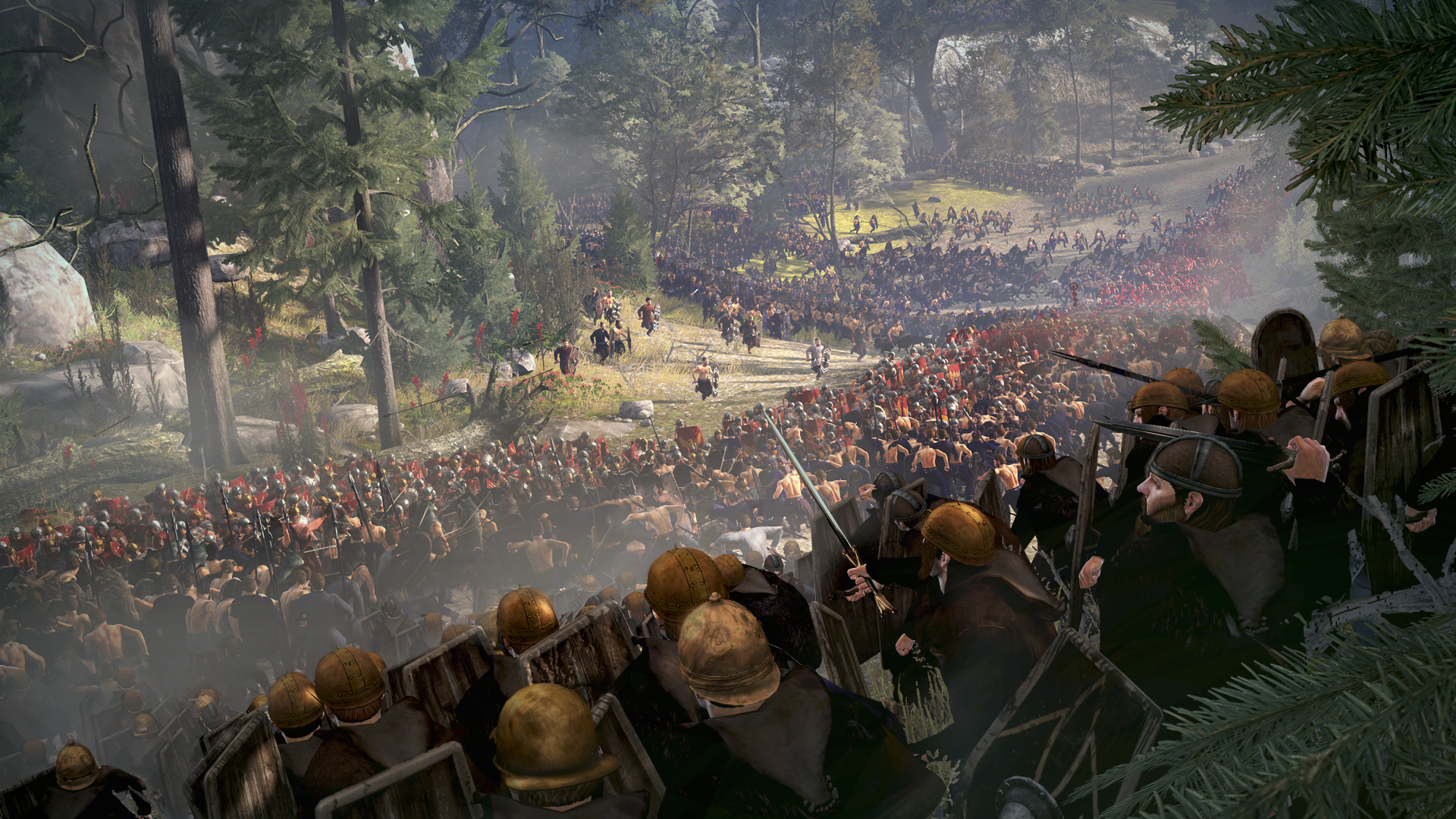
Roman legions required open ground to form their devastating infantry lines. The Battle of Teutoburg Forest stripped them of this massive advantage. Arminius guided the Roman column directly into an unmapped, dense geographical bottleneck. The local terrain forced the Roman marching line to stretch out for several miles. Thick forests blocked visibility. A massive, muddy earthen ridge sat on one side of the narrow path. Deep, impassable bogs bordered the other.
The Roman troops could not see the front or the rear of their own column. They carried heavy equipment, including tools for building their daily marching camps, their armor, and their weapons. The civilian camp followers slowed the pace to a crawl. The entire formation walked directly into a massive, meticulously prepared death trap.
The Elements and the Slaughter
The ambush began during a torrential downpour. The weather turned the ground into a completely unmanageable quagmire. The heavy leather and wood scutum shields of the legionaries soaked up the rainwater, becoming incredibly heavy and difficult to maneuver. The metal armor of the soldiers dragged them down in the thick mud.
The Germanic warriors attacked from the high ground. They utilized the tree cover to launch devastating volleys of spears. The Roman soldiers slipped in the mud and could not form their defensive testudo formations. Every time a Roman centurion attempted to organize a counterattack, the Germanic warriors simply melted back into the deep woods. They refused to engage in the close-quarters sword fighting where the Roman gladius reigned supreme.
The Collapse of Command
The Battle of Teutoburg Forest did not end in a single afternoon. The slaughter lasted for three grueling days. The Roman army attempted to build a fortified camp on the first night, but the constant hit-and-run attacks prevented them from establishing proper defenses. The casualty rate skyrocketed.
On the third day, the trap fully closed. The remaining Roman cavalry panicked, abandoned the infantry, and attempted to flee the forest. They were hunted down and destroyed in the swamps. Recognizing the absolute totality of his failure, Publius Quinctilius Varus chose suicide over capture. He fell on his sword in the mud. Without their commander, the remaining Roman resistance collapsed entirely. The three legions were completely wiped from the face of the earth.
The Aftermath and the Impact on the Civitas
When news of the complete annihilation reached the capital, massive panic erupted in the forum. Citizens legitimately feared a Germanic invasion of Italy itself. The political stability of the empire shook to its core. Historians record that Emperor Augustus wandered the halls of his domus for months, banging his head against the marble walls and screaming for Varus to return his missing legions.
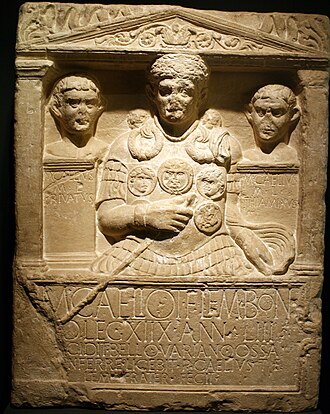
The numbers of Legions XVII, XVIII, and XIX were permanently retired from the Roman military roster in a display of absolute disgrace. The empire abandoned all immediate plans to conquer the territories beyond the Rhine. The river became a heavily fortified, permanent border. The Battle of Teutoburg Forest proved that the Roman war machine could be broken by superior intelligence, extreme patience, and the ruthless exploitation of local geography. Understanding how to navigate such perilous economic and political landscapes is key to making a living in ancient Rome.
Redefining Leadership & Authentic Roleplay in Venusia Magna
The political and military structures of antiquity were heavily guarded systems controlled by a very specific demographic. Venusia Magna features a vital, historically grounded lore exception regarding leadership and power. Within our civitas, women possess the absolute legal right to hold political office, govern the city, and direct the flow of power.
Female characters execute high-level political strategies, form devastating alliances, and shape the entire future of our community. This structural rule creates a deeply competitive, highly engaging political arena for all participants. Every roleplayer has the opportunity to rise to the highest levels of influence, manage the city resources, and dictate the laws of the forum.
Venusia Magna provides a high-quality environment for adult roleplay within Second Life. We demand brutal honesty, high efficiency, and deep immersion in all of our systems. When you enter our city, you participate directly in a living, breathing political machine. The architecture, the legal framework, and the daily cultural routines deliver absolute historical realism. The future of your character depends entirely on your intelligence, your alliances, and your raw ambition. Need an authentic identity to begin? Start by shaping your destiny with our Roman Name Generator.
About the Author and the Venusia Magna Vision
I am Jess X, recognized across our community as Junia. The X-Sisters brand was established in 2023. We set a completely new standard for community building and immersive venues in virtual worlds. Expanding upon that highly successful foundation, Venusia Magna was founded in late 2024.
We dedicate ourselves completely to deep research into classical history. We guarantee our venues deliver an authentic, highly engaging experience. Our leadership team focuses entirely on providing a stable, high-performance sim. Roleplayers can fully explore the complexities, the dangers, and the incredible status of ancient society here. We do not build standalone video games. We build lasting, deeply detailed communities inside of Second Life.
Enter the Empire
Are you ready to test your strategic brilliance and claim your political status? Join the premier adult Ancient Roman roleplay destination today. Enter the forum and forge your legacy right now.
Discover Venusia Magna
Leave a Reply