Echoes of the Empire
9 Everyday Phrases You Didn’t Know Came From Ancient Rome
Ancient Rome fell over a thousand years ago, but the Empire still influences our daily conversations. Whether you are discussing politics, law, or personal motivation, you are likely using Latin concepts and historical idioms. In Venusia Magna, we prioritize historical grounding within our roleplay community. Part of that immersion is understanding the weight behind the words we use.
Crossing the Rubicon
Passing the point of no return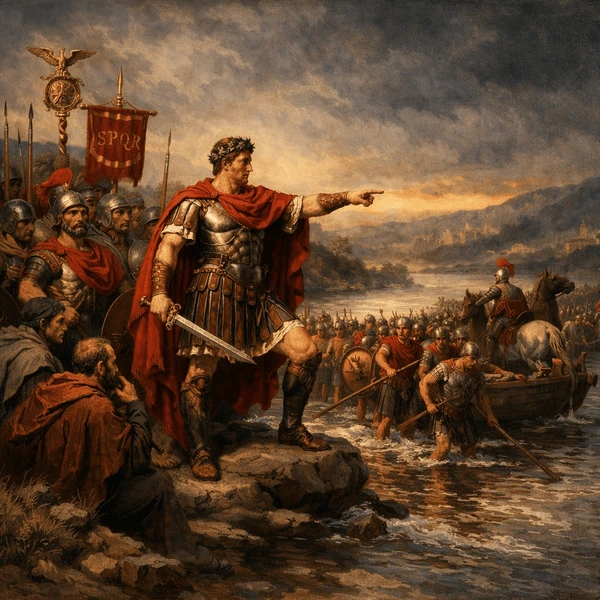 Image Credit: venusiamagna.slxsisters.com / Shutterstock
In 49 BC, Julius Caesar was a general returning from the Gallic Wars. By law, no general could lead a standing army across the Rubicon river into Italy. To do so was a declaration of civil war against the Senate. Caesar hesitated at the bank before leading his 13th Legion across the water. Today, the phrase describes a decision that cannot be undone.
The Die is Cast
Alea iacta estAccording to the historian Suetonius, Caesar uttered these words as he crossed the Rubicon. It is a gambling metaphor. Once the dice are thrown, the player has no control over the outcome. In modern usage, it means that a process has started and the results are now out of your hands.
I Came, I Saw, I Conquered
Veni, vidi, viciThis was Caesar’s concise report to the Senate after a swift victory at the Battle of Zela. It was intended as a display of military efficiency and absolute dominance. It remains the standard shorthand for achieving a fast and total victory.
And you, Brutus?
Et tu, Brute?This phrase represents the ultimate betrayal. While most historians believe Caesar’s actual final words were in Greek (asking “You too, my child?”), Shakespeare popularized the Latin version. It is used when someone is unexpectedly betrayed by a close friend or ally.
Seize the Day
Carpe DiemThe poet Horace wrote this as part of a longer thought: “pluck the day, trusting as little as possible in tomorrow.” It was a call to action based on the uncertainty of the future. In our study of Roman life, this sentiment is often reflected in how characters navigate the dangers of the city.
Remember You Must Die
Memento MoriThis served as a check against hubris. During a military triumph, a slave would stand behind a victorious general in his chariot. The slave’s job was to whisper that the general was merely a man, not a god. Today, it serves as a reminder of mortality and the importance of humility.
The Existing State of Affairs
Status quoThis is a diplomatic term derived from “status quo ante bellum,” meaning the state of things as they were before the war. It is used in everything from politics to estate management to describe maintaining the current baseline.
By Heads
Per capitaRome was a city of bureaucracy. The official registry and census were recorded by “heads” to determine tax obligations and grain doles. We still use this term in modern statistics to measure data per individual person.
And The Rest
Et cetera (etc.)Often abbreviated as etc., this simply means “and the other things.” It was used by Roman scribes and merchants to complete lists of similar items without writing every individual word, just as it is used today.