
Guide of the Servus Romanus
IMPORTANT ROLEPLAY NOTE: This guide outlines the historical and in-character realities of the Servus Romanus in the year A.D. 150. Slavery was a brutal and legally absolute institution in the Roman Empire. This content is provided strictly for adult, historical roleplay immersion within the Venusia Magna Sim. It reflects the unsentimental legal and social context required for high-fidelity Roman roleplay.
In the eyes of Roman law, a slave (Servus) was not a person (persona) but property (res). The same is the case of Roman roleplay in Second Life. Slaves possessed no legal rights and could not own property (though they could manage a peculium on behalf of their owner). The owner (Dominus or Domina) held absolute authority over the Servus Romanus, a power extending from the Patria Potestas (father’s power) over his family to his chattels. That owner would conduct slave training. For a deeper understanding of the rights of the free citizen, consult our Roman Social Hierarchy Guide.
The entire purpose of training was to convert a newly acquired person into a maximally efficient and obedient piece of property, the goal being to make sure of their full utility to the household or estate.
Table of Contents
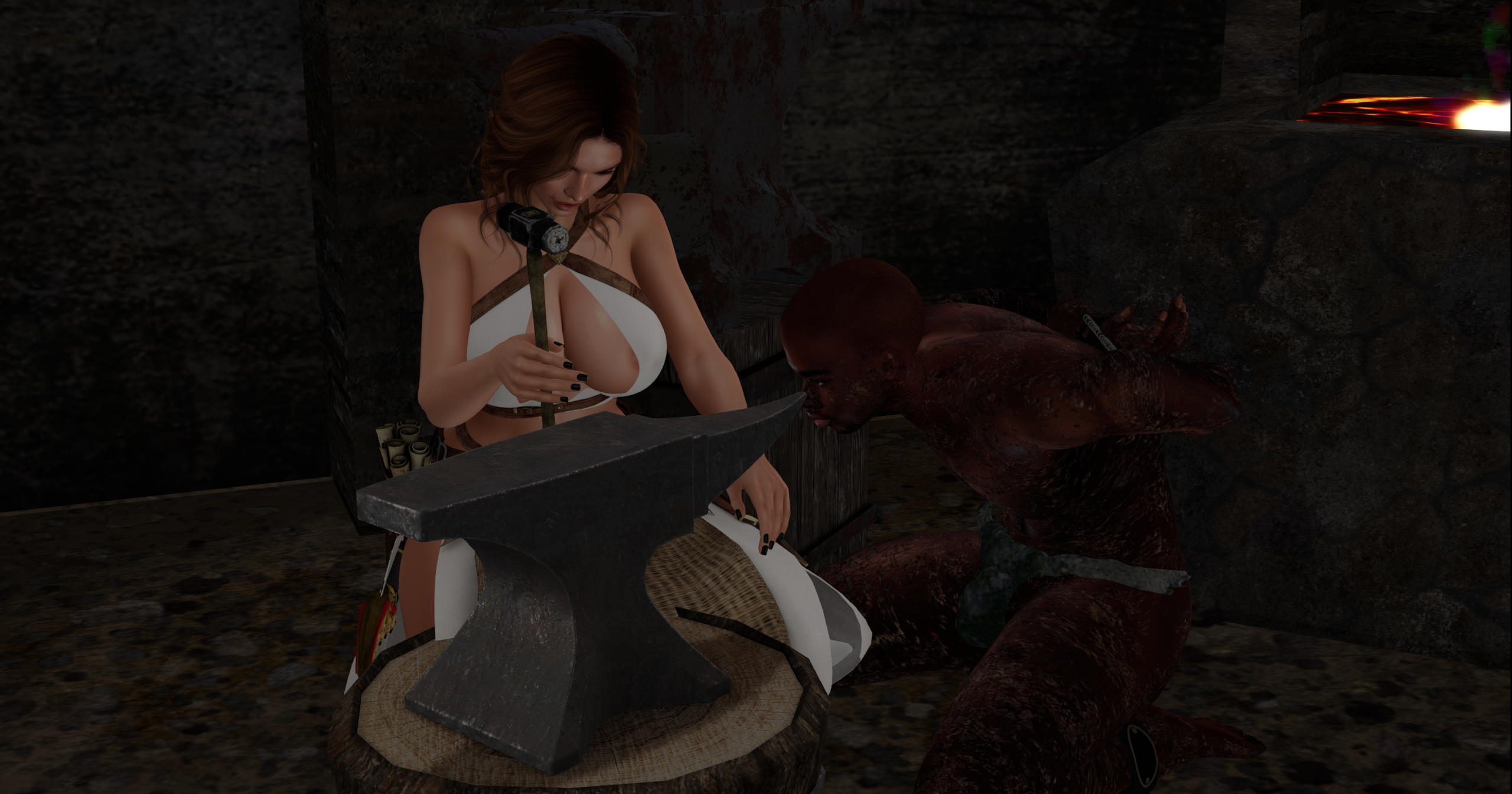
Initial Acquisition and The Process of “Breaking”
The moment a new individual entered the ownership of a Roman citizen, the systematic process of “breaking” their former identity and instilling rigid discipline began. This phase was the most important for ensuring long-term utility and obedience. For detailed background on the economic drivers of the trade, see this study on Ancient Roman Slavery.
1. Assessment and Branding
Upon purchase, the new servus was immediately assessed for physical strength, pre-existing skills, intelligence, and potential temperament.
- Skill Categorization: The servus would be assigned a value tier: high-skill (for domestic or intellectual roles), medium-skill (for crafts and maintenance), or low-skill (for hard labor).
- Physical Marking: To deter escape and confirm ownership, the servus was often marked. This might involve branding (a hot iron mark, usually on the face, arm, or leg), or a legal tattoo (stigma) detailing ownership, status, or a history of running away. This mark served as a constant reminder of their property status.
2. Psychological and Physical Conditioning
The first weeks focused on establishing absolute power. This conditioning was designed to eliminate defiance, independence, and personal identity.
- Isolation and Deprivation: The servus was often isolated, given minimal rations, and dressed in coarse, distinct attire (vestis servilis). They were allowed no possessions.
- The Command Language: They were required to immediately learn and respond to basic Latin commands and greetings. Failure to respond or using the wrong language was met with immediate, decisive correction.
- Constant Surveillance: The servus was placed under the authority of the Villicus (if rural) or a trusted Atriensis (if urban), who maintained strict watch and reported any sign of disobedience or sullenness to the Dominus or Domina.
- Establishing the Threshold: Immediate, brutal punishment for minor infractions was essential to set a high bar for obedience. The Servus Romanus must learn that their comfort and survival depend entirely on the caprice of the master.
Protocol, Conduct, and Deportment
Regardless of a slave’s job, all servi were required to adhere to a strict set of protocols that emphasized their legal inferiority at all times.
Greetings and Address
The rules for addressing the Domina (female mistress) or Dominus (male master) were non-negotiable and instant:
- Primary Address: The Dominus/Domina must always be addressed by their full title, never by name.
- The Approach: A servus should never approach the Dominus/Domina without permission. When summoned, they must approach slowly, head bowed, hands visible, and wait for the master to speak first.
- Speech and Tone: Responses must be direct, concise, and submissive. Slaves were forbidden from offering opinions, excuses, or unnecessary commentary. The tone must be neutral or respectful. Slaves generally addressed free citizens as Domine or Domina.
- Entering the Space: Before entering a private room or speaking, a servus must announce their presence and ask permission to enter.
Posture and Body Language
The posture of the servus must physically project submission and deference:
- The Gaze: A servus was strictly forbidden from looking their Dominus or Domina directly in the eye, as this was viewed as a challenge or an act of defiance. The gaze should be fixed on the ground or the master’s feet.
- Space: The servus must maintain a deferential distance, never crowding the master unless specifically commanded (e.g., to adjust clothing or bring water).
- Movement: Movements must be swift, efficient, and silent. Slowness was seen as laziness or disrespect. They must never cross the path of a free person or stand in the way of a superior.
- Rest: A servus should never be seated in the presence of a free person unless expressly ordered to do so, regardless of their role or training level.
Attire and Appearance
All servi were dressed to be instantly identifiable.
- Clothing: Simple, coarse, and often drab clothing (vestis servilis) such as a tunic in a muted color (brown, grey, dark red). It should be plain and unadorned.
- Grooming: Servi were generally kept clean but unadorned. Female slaves, particularly those with specialized roles (Ornatrix or high-level concubines), were groomed to the exact specifications of the Domina, often shaved or styled to reflect the family’s status. Male slaves were typically clean-shaven or had simple haircuts.
Hierarchical Positions and Job Training
Training was tailored to the economic utility of the servus. The separation between city (Urbana) and country (Rustica) slaves was vast in terms of discipline and life quality.
Familia Urbana (Urban Household Slaves)
These were the highest-value, most highly trained slaves. Their roles required intelligence, literacy, and extreme discretion. Punishments were often psychological, but failures were more severely punished due to the damage they could inflict on the Dominus’ reputation.
Specialized Servus Positions (A.D. 150)
| Position | Primary Duty | Required Training/Skill | Protocol Emphasis |
|---|---|---|---|
| Atriensis | Head butler; manager of the entire household slave staff. | Management, accounting, absolute loyalty, ability to command other slaves. | Discretion, precision, and maintaining the master’s status. |
| Paedagogus | Tutor and moral guardian of the master’s children. | Literacy (Greek/Latin), Philosophy, extreme moral conduct (must be trustworthy). | Authority over free children; absolute loyalty to the Dominus. |
| Ornatrix | Personal maid, hairdresser, and cosmetic expert to the Domina. | Intricate hair styling, advanced cosmetic knowledge, silence, and discretion. | Intimacy without familiarity; must be utterly silent about household secrets. |
| Nomenclator | Memorizing and announcing the names and social rank of guests at parties. | Total memory recall, knowledge of social hierarchy, clear, strong voice. | Flawless execution; inability to recall a name meant extreme shame for the master. |
| Litteratus / Scriba | Scribe, secretary, or manager of the master’s accounts and library. | High literacy, numeracy, fluency in Greek (the language of philosophy and science). | Reliability, meticulousness, and absolute honesty regarding finances. |
Familia Rustica (Rural Estate Slaves)
These slaves were often chained, housed in barracks, and managed through fear and brute force. Training was minimal, focused on labor efficiency and immediate compliance.
Agricultural & Industrial Roles
| Position | Primary Duty | Required Training/Skill | Protocol Emphasis |
|---|---|---|---|
| Villicus | Overseer of the entire farm or estate (often a slave himself). | Management, accounting, ability to enforce discipline and quotas (often brutally). | Strict efficiency, production numbers, and absolute submission to the absent Dominus. |
| Agrarius | Field hand, planting, harvesting, and tilling. | Physical strength, knowledge of seasonal cycles, endurance. | Endurance; minimal training in manners; maximum discipline. |
| Fornax | Furnace worker, often in mills or large kitchens. | Heat endurance, knowledge of fire maintenance. | Compliance with dangerous tasks; often deemed highly expendable. |
Discipline and Enforcement (Poena Servorum)
Discipline was not merely corrective; it was instructional. The servus was taught that any deviation from protocol resulted in swift, painful consequences.
Tools of Correction
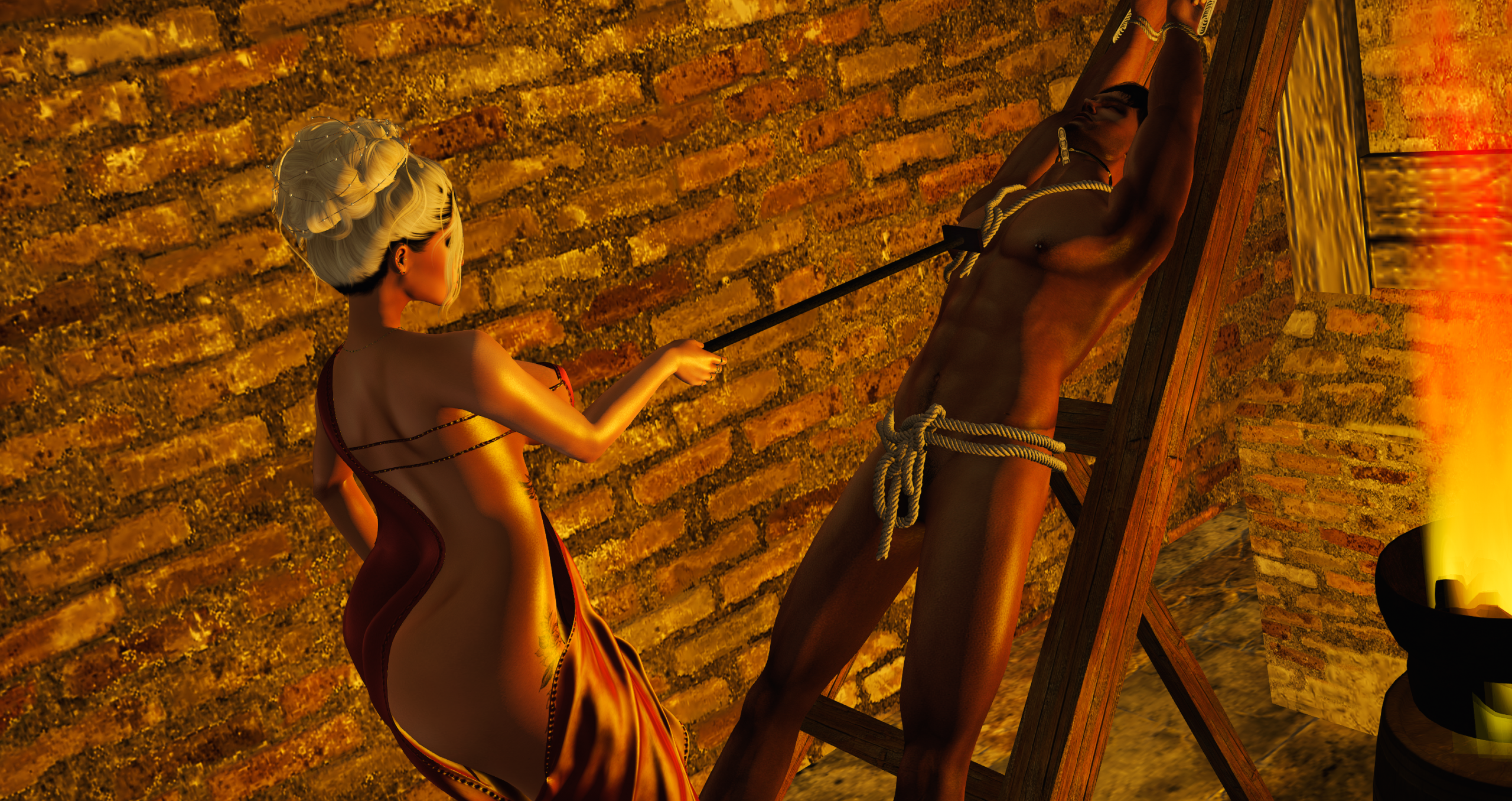
The most common tools for maintaining order were the rod (virga) and the whip (flagellum). The severity of the punishment directly reflected the slave’s value and the infraction.
- Whipping: Reserved for moderate to severe disobedience, theft, or poor performance. It was administered publicly to serve as a warning to the entire familia.
- The Fetters (Compedes): Chains or leg irons were used for slaves deemed flight risks, or those in the familia rustica who performed intense labor. A slave discovered wearing chains indoors without permission of the Dominus risked severe punishment.
- The Workhouse (Ergastulum): A rural prison where heavily chained, recalcitrant slaves worked under the supervision of a brutal Villicus. This was a common threat for disobedience.
The Penalty for Flight
Running away (fugitivus) was the most serious offense. A captured runaway slave faced severe, often lethal, penalties, including crucifixion. For high-value slaves, they might be publicly branded with the letter F (for fugitivus) or forced to wear a heavy metal collar engraved with instructions to their captor. This served as a visible and permanent deterrent to other members of the familia.
Specialization: The Gladiatorial and Sexual Servus
Some roles required intense, highly specialized training beyond simple domestic obedience.
Training the Gladiator
Gladiators were highly prized property. Their training in the ludus was managed by a lanista (often a former gladiator).
- Discipline and Mortality: Gladiatorial training was essentially military, demanding absolute physical conditioning, adherence to specific weapon styles (as detailed in the Gladiator Archetype Guide), and a mindset that accepted death as a professional hazard.
- Diet and Value: Due to their massive investment cost, gladiators received superior food and medical care compared to common slaves—not out of kindness, but to protect the investment.
Sexual Servitude and Protocol
Slaves used for specialized sexual services were often trained from a young age and commanded the highest prices.
- Protocol: Their training focused on performing intimate acts on command, maintaining perfect silence and obedience, and ensuring the absolute discretion of the Dominus/Domina. They were often given specialized names (deliciae) and were expected to maintain a level of grooming and beauty far exceeding other slaves.
- The Price: Their high economic value meant they were simultaneously the most privileged in terms of comfort and the most rigidly controlled in terms of compliance.
The Economics of Control
Ultimately, Slave Training in Ancient Rome was an economic mechanism.
A dead slave or a rebellious slave was lost capital. Therefore, the Dominus had to balance the need for absolute submission with the necessity of preserving the property’s health and utility. The most effective masters were those who could achieve maximum obedience and productivity with the minimum necessary application of force, ensuring the long-term, profitable function of their slave workforce.
Immersion
This training guide provides the essential protocol for managing the Servus Romanus in Venusia Magna. To make sure your roleplay is consistent with the Roman environment, utilize these resources:
- Roman Name Generator: Ensure your slave has a proper servus name (often Greek or foreign).
- Social Structure Guide: Understand the legal limitations placed on the servus in public life.