
Clothing Rules in Venusia Magna
Protocol, Status, and Attire within the Roman Empire
Strict Sim Rule
Modern clothing remains strictly prohibited in Venusia Magna at all times. Wearing out-of-character or modern attire will result in your immediate removal from the sim without warning.
In Venusia Magna, your clothing serves as the first and most powerful indication of your character’s legal status, wealth, and moral alignment. Proper attire acts as a non-negotiable component for deep Second Life Roman Roleplay immersion within our A.D. 150 setting. Failure to dress according to your status results in immediate in-character challenges, heavy fines, or public shaming.
Clothing Protocol for Free Citizens
Our sim operates with an important alternative history element. In Venusia Magna, free women hold legal equality with men regarding social status and property rights. This reflects the peak prosperity and changing dynamics of the Antonine Dynasty. This total equality reflects directly in their formal, public attire.
Attire for Male Citizens (Cives Romani)
The fundamental clothing for a free male citizen relies entirely on the tunic and the toga.
- The Toga (Toga): This garment represents the ultimate symbol of Roman citizenship. Men must wear it for all formal and public events, including visiting the Forum, attending the Senate (Curia), participating in public gatherings, and paying respects to a Patron. Failure to wear the Toga in public operates as a direct insult to the state.
- Toga Pura/Virilis: The plain, off-white wool toga worn by the common citizen.
- Toga Praetexta: A toga distinguished by a broad purple stripe, reserved strictly for magistrates, senators, and young boys until they come of age.
- The Tunic (Tunica): Men wear the tunic securely under the Toga. Senators and Equestrians mark their advanced rank with distinct vertical stripes known as clavi.
- Latus Clavus: A broad purple stripe reserved exclusively for Senators and their immediate family members.
- Angustus Clavus: A narrow purple stripe reserved exclusively for Equestrians (Equites).
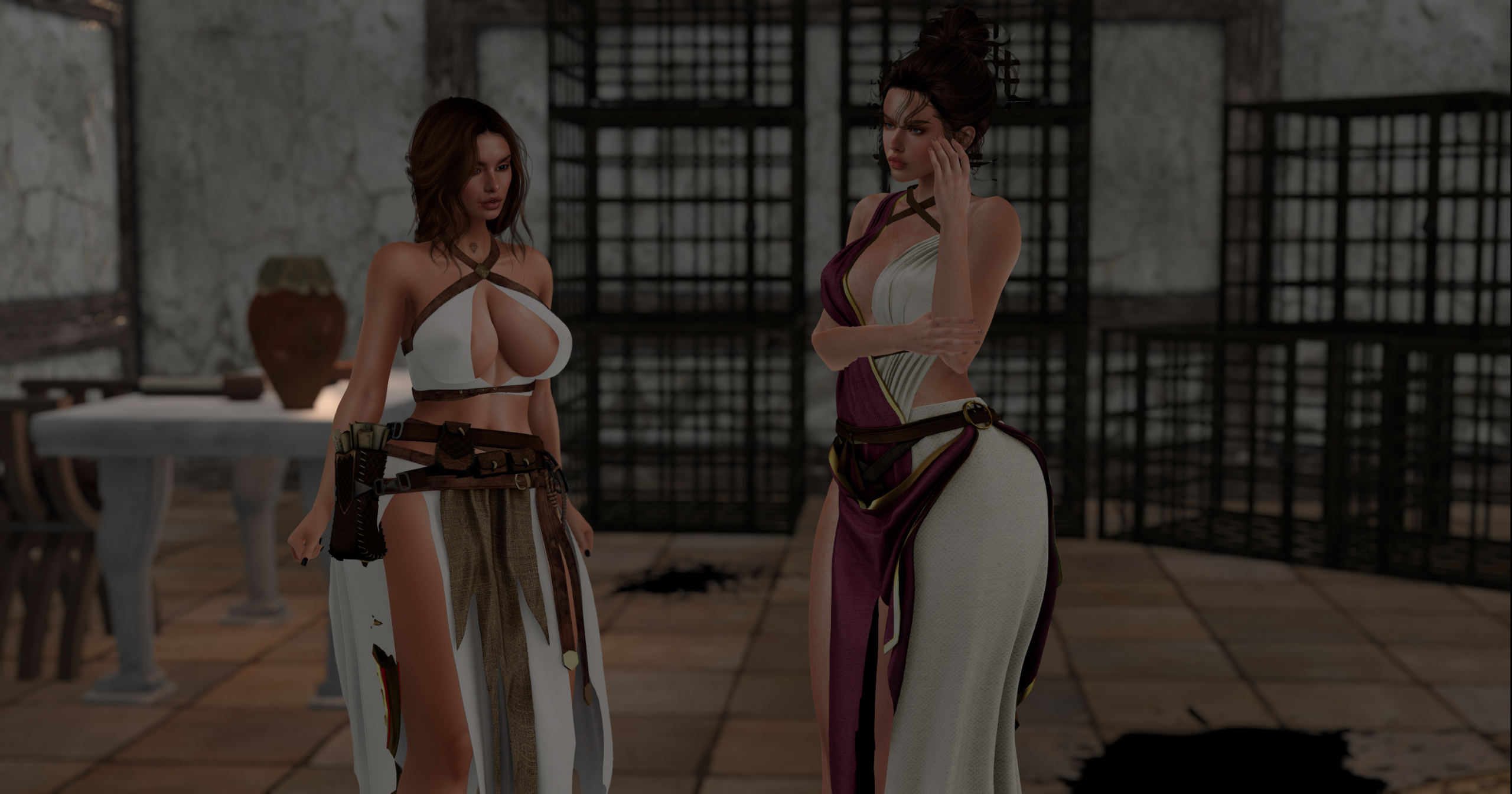
Attire for Female Citizens (Cives Romanae)
The formal attire for free women completely mirrors the respect and high status of their male counterparts.
- The Stola (Stola): The primary garment of a married Roman matron. It consists of a long, sleeveless dress worn over an under-tunic and belted securely below the breasts. The Stola acts as the female equivalent of the Toga in denoting absolute respectability and marital status. Women must wear it for all public or formal functions.
- The Palla (Palla): A large rectangular shawl draped gracefully over the head and shoulders when appearing in public or stepping outside the home. This garment signifies deep piety and modesty.
- Status Marks: Because free citizens stand equal in Venusia Magna, women of senatorial or equestrian families possess the right to incorporate the appropriate colored clavi into the borders of their Stola. This denotes their inherited status and reflects their legal power within the community.
Mandatory Clothing for Slaves and Plebeians
Clothing for slaves and lower-class plebeians serves the distinct function of marking them visually as inferiors. The law requires this distinction to prevent the lower classes from passing as high-status citizens.
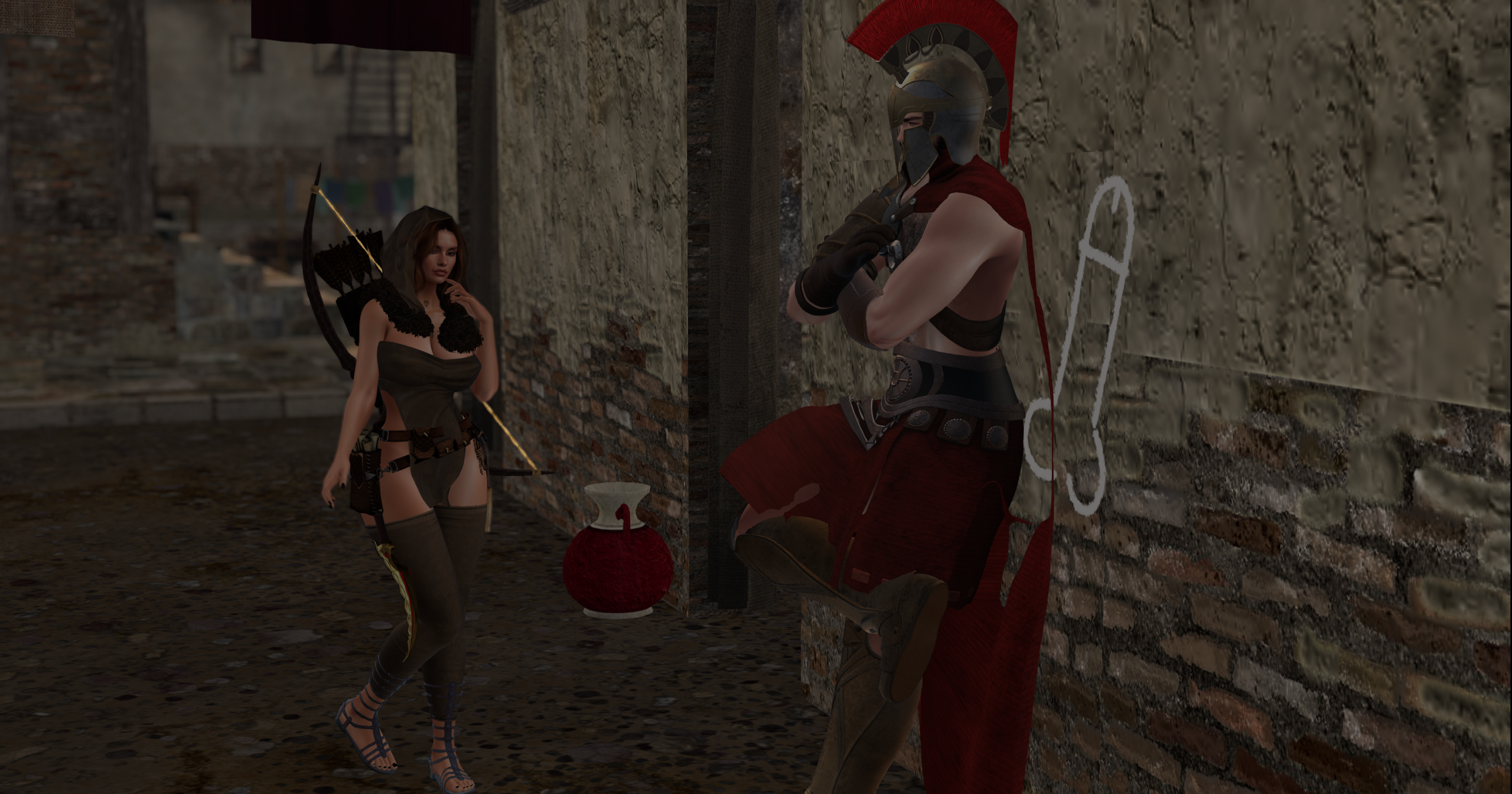
Slaves (Servus Romanus)
- Requirement – Clothing is Mandatory: The idea of slaves walking around naked is a complete historical myth. Slaves represented highly valuable property. Owners kept them clothed, often in uniform, coarse material to identify them immediately as the familia of a specific house.
- The Tunic (Vestis Servilis): A short, dark, rough tunic colored in brown, grey, or dark red. Slaves wear it unbelted or belted strictly at the waist. It must remain conspicuously plain and lack any purple dye or status ornamentation.
- Identification: Slaves must wear clear identification. A servus tag or a highly visible metal collar properly marks them as owned property.
For the complete rules regarding discipline, identification, and daily expectations, please consult the Servus Romanus Training Protocol.
Plebeians (Plebes)
Lower-class free citizens wear simpler, less cumbersome clothing than their elite Patrician counterparts.
- Men: Plebeian men wear simple tunics and heavy cloaks (paenula). The law explicitly forbids them from wearing the Toga unless they hold a minor magistracy or receive special, documented dispensation from their Patron.
- Women: Plebeian women wear simple, colorful tunics and a veil (ricinium) in place of the heavy Palla. They should avoid wearing the formal, matronly Stola.
Rules Regarding Nudity and Exposure
Venusia Magna operates as an adult sim. We strictly enforce the rules governing public and private nudity to maintain proper immersive storytelling.
Public Nudity (The Forbidden)
- General Rule: Nudity remains completely forbidden in all open public areas of the sim. This includes the Forum, main roads, temples, and open shops. The only approved exceptions to this rule include direct commands from the Slave Trader, public punishments, and executions.
- Legal Consequence: In-character, Roman society views public nudity as a grotesque lack of civilization, a threat to public order, and a sign of utter degradation. The City Guard will subject any free citizen found publicly naked to immediate arrest, severe fines, and deep imprisonment. An owner will subject a slave found naked in public to extreme disciplinary action.
Semi-Public Nudity (The Permitted)
Players may engage in nudity only in designated, private, or semi-public areas where the action aligns with historical accuracy.
- The Baths (Thermae): Nudity remains fully permitted within the public bathhouses. This building serves as the primary in-character location for exposed bodies.
- The Arena: Gladiators receive permission for varying degrees of exposure depending on their specific Gladiator Archetype. This exposure applies strictly to combat situations.
- Private Residences: Nudity remains permitted within the locked boundaries of a private home (domus), a walled courtyard, or a private rental space.
Nudity and Slavery (Dispelling the Myth)
Slaves face no requirement to be naked at any time, in any public or semi-public space, for any reason.
The modern assumption of Roman slaves remaining constantly stripped naked contradicts history. As highly valuable property, an owner dictated their slave’s clothing and grooming for maximum utility. Owners provided clothing to prevent physical damage, severe sunburn, and daily injury.
Required Clothing Resources
For further reading on the deep history and economics that define these formal clothing rules, consult these academic resources:
- History of Roman Clothing: Learn more about the evolution and deep sociology of the Roman Toga and the Stola.
- Roman Citizenship Rights: Understand the legal distinction defining who received permission to wear the Toga by studying Roman Law and formal Citizenship.
Enter the Empire
Dress appropriately and jump into the daily life of Venusia Magna. Your journey into the ancient world begins with your attire. Review our City Charter to understand the full weight of the law before you arrive.
Submit Your Application Teleport to the Sim